Unilateral training: tracking one side at a time
Single-arm and single-leg exercises work each side on its own. Track them that way too, and you’ll see a gap between left and right before it grows.
What unilateral training is
Unilateral means one side at a time: split squats, single-leg Romanian deadlifts, single-arm rows, one-arm presses. Each side has to do its own work, and your core works to keep you steady.
Why track each side
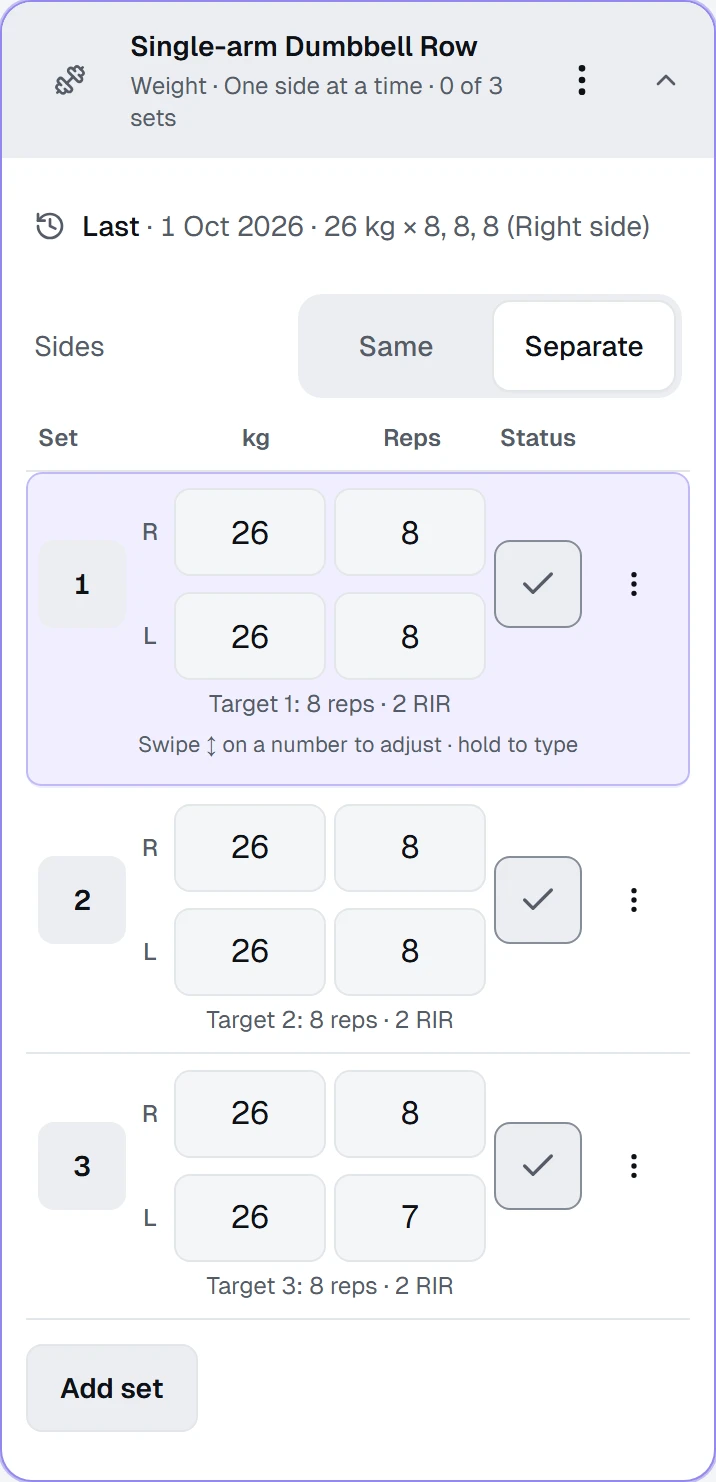
On a barbell your stronger side can quietly carry the weaker one. With one side at a time it can’t. If your right arm rows 26 kg for 8 and your left only gets 7, that’s worth knowing, and worth seeing whether it closes over a few weeks.
Same or separate
Most of the time both sides do the same weight and reps, so log them once. Log them separately when:
- one side came up short, like the 8 and 7 above,
- you’re working on a weaker side, or coming back from a niggle, or
- you use different weights per side.
A simple rule: start with the weaker side, then match its reps on the other.
Doing it in Voltra
- Turn on One side at a time for the exercise, either on the exercise itself or from its options menu during a workout.
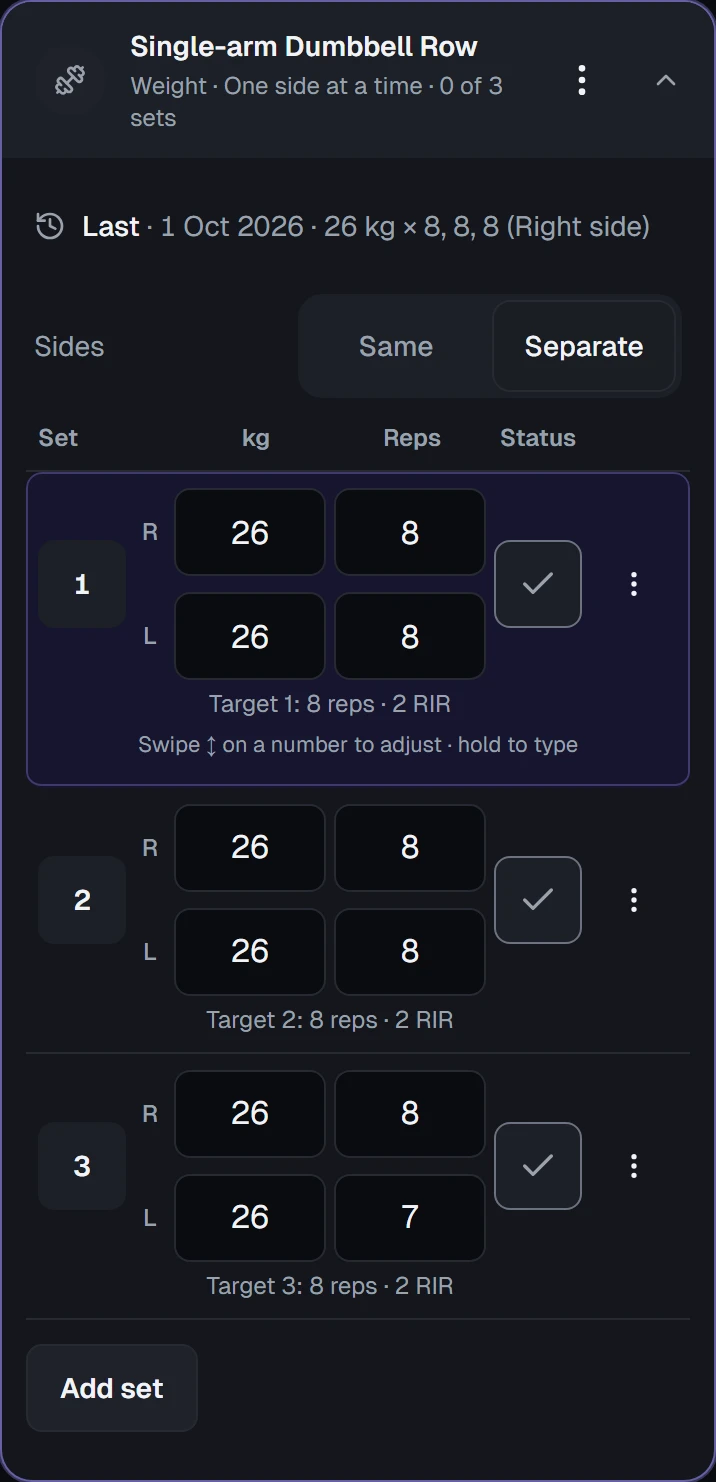
- In the workout, pick Sides: Same to enter one weight and reps for both sides, or Separate to get a right (R) and left (L) line per set.
- Tap the check once to log both sides of the set together.
Timed exercises, like a side plank, get a stopwatch per side when sides are separate. Sets from last time come back the way you logged them, so a set where the sides differed shows up separate again.
Reading it back
- The Last line shows “each side” when both sides matched, and the right side when they didn’t.
- Volume counts once per side, so a pair of 26 kg × 8 counts both arms.
- With Pro, an exercise’s progress chart can show both sides together, or right and left on their own.
Sides work alongside set targets: one right-and-left pair uses one target.